
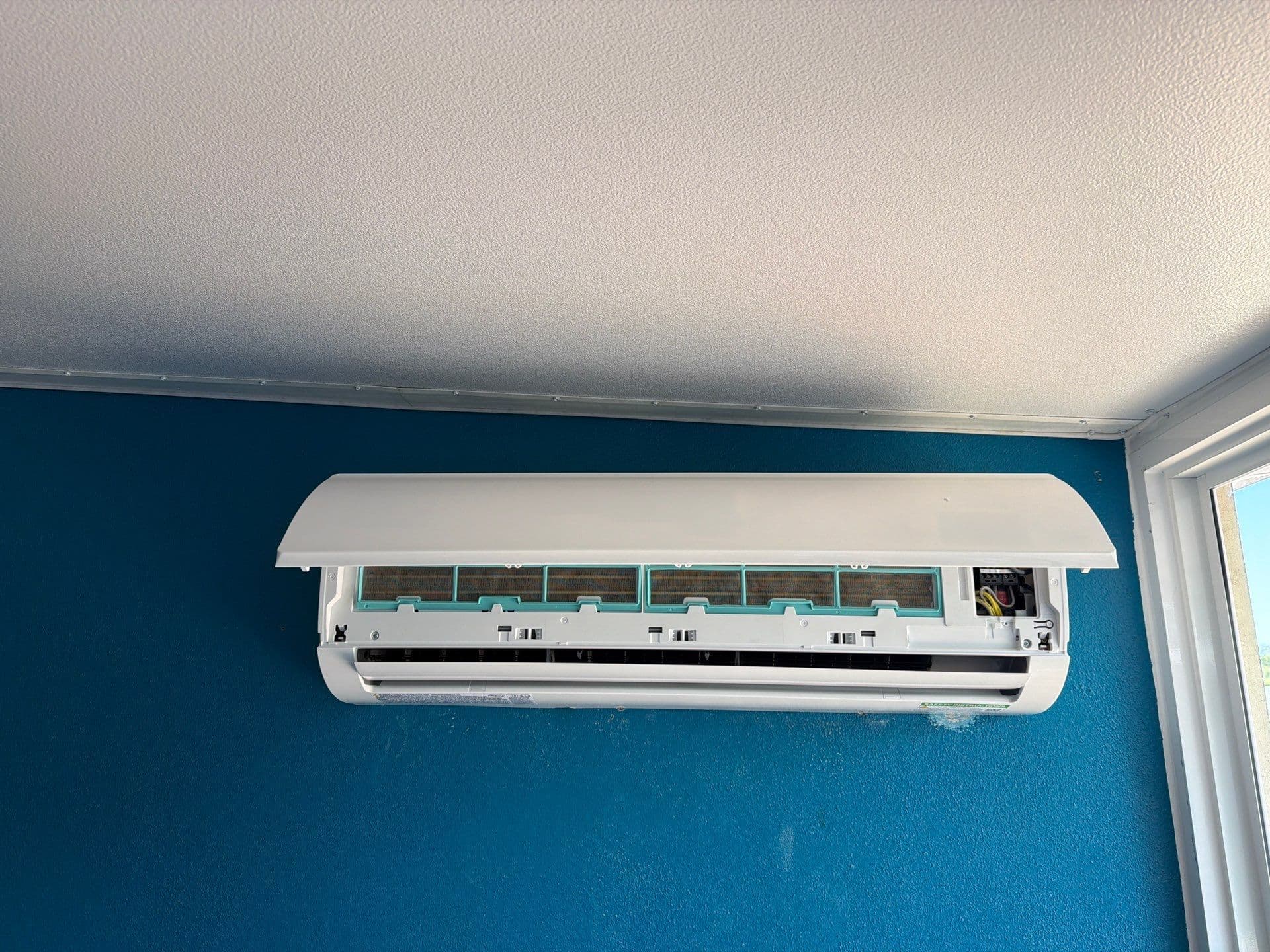
Mini-Split Repair in Tampa, FL
Blinking lights, a head dripping down the wall, one zone that quit cooling — ductless systems fail in their own particular ways, and fixing them takes techs who work on them every week. Mitsubishi, Daikin, LG, Carrier, and more. Upfront pricing, most repairs in one visit.
The Six Ways Mini-Splits Fail in Tampa
Ductless systems are reliable, but Florida is hard on them in two specific ways: relentless condensate (our humidity means the drain path works overtime) and salt-air corrosion on coastal condensers. Nearly every repair call we run matches one of these six patterns.
Blinking lights / error codes
A flashing timer or operation light is the unit reporting a fault code — communication errors between head and condenser, a stuck louver motor, or a sensor failure. We carry the code charts for Mitsubishi, Daikin, LG, and Carrier and decode it on the spot instead of guessing.
One zone won't cool
On multi-zone systems, a single dead head usually means an electronic expansion valve stuck closed, a refrigerant distribution issue, or a failed head board — not a dead condenser. Diagnosing at the branch box level keeps you from replacing hardware that's actually fine.
Water dripping from the head
The #1 mini-split complaint in Tampa. The condensate drain line or pump clogs with algae in our humidity, the drain pan overflows, and water runs down your wall. Clearing the line, cleaning the pan, and servicing or replacing the condensate pump fixes it — usually in one visit.
Musty smell or weak airflow
Mini-split blower wheels are mold magnets in Florida. The wheel sits wet behind the coil, collects biofilm, and starts throwing musty air and losing airflow. A deep clean — coil, blower wheel, and drain pan — restores airflow and kills the smell at the source.
Ice on the indoor coil
Ice means the coil is running colder than design: low refrigerant from a flare-fitting leak (the classic mini-split leak point), a filthy filter, or a failing fan motor. Running it iced up risks the compressor, so shut it off and call — leak-check and recharge is routine work for us.
Unit won't respond to the remote
Sometimes it's a $5 fix (remote batteries, a blocked IR eye), sometimes a failed indoor receiver board or a tripped condenser disconnect. We check the cheap stuff first and tell you exactly what we found — you'll never pay board-replacement money for a battery problem.
Thinking about adding ductless to a garage, lanai, or addition instead of repairing an old window unit? See our ductless mini-split installation page — same techs, new equipment, properly sized for the space.
What Mini-Split Repair Costs in Tampa
Real ranges, parts and labor included, quoted in writing before work begins. The diagnostic fee applies toward your repair.
Minor — Drains & Sensors
$150–$350
Condensate line clearing, pump service, thermistor/sensor swaps, remote and receiver issues. Most dripping-head calls land here.
Cleaning — Coil & Blower Wheel
$250–$450
Per-head deep clean: bagged coil wash, blower wheel de-gunking, pan sanitizing. Fixes musty smells and restores lost airflow.
Major — Leaks, Valves & Boards
$400–$800
Flare-fitting leak repair with recharge, expansion valves, indoor or outdoor circuit boards, fan motors. Still usually cheaper than replacing a quality head.
One honest caveat: big-box value brands sometimes fail in ways that aren't economical to fix — a dead compressor on a $900 condenser is a replacement conversation, not a repair. We'll tell you which situation you're in before you spend a dollar on parts.
Why Mini-Splits Need a Tech Who Knows Them
A ductless system is inverter-driven, communicates digitally between head and condenser, and meters refrigerant with electronic expansion valves. A tech who treats it like a shrunken central AC — hooking gauges to a running inverter system, guessing at charge by pressure — can do real damage. Proper mini-split service means weighing charge, reading fault codes, and testing boards the way the manufacturer specifies.
Flare fittings are the other difference. Nearly every mini-split refrigerant leak happens at the four flare connections, and the fix is re-flaring with proper torque — not just tightening and topping off. A top-off without a leak repair is a subscription, not a solution, and we don't sell those.
Every repair visit ends with the condensate path tested, the filters washed, and the system verified heating and cooling in both modes. Pair it with an annual maintenance visit and a quality mini-split will outlast most central systems in this climate.
All Major Ductless Brands
Mitsubishi
The Tampa Bay ductless workhorse — deep parts availability and long service life. Well worth repairing at almost any age.
Daikin
Excellent inverter systems; we stock common thermistors and service their branch-box multi-zone setups.
LG & Carrier
Art Cool and Carrier/Midea heads are common in newer construction — we handle their codes and boards routinely.
Value brands
MRCOOL, Pioneer, Senville, Gree — we repair them honestly and tell you when a fix no longer pencils out.
Mini-Split Repair Questions
How much does mini-split repair cost in Tampa?
Most ductless repairs run $150–$800. Drain line clearing, condensate pump service, sensor replacement, and remote/receiver issues sit at the low end ($150–$350). Blower wheel and coil deep-cleaning typically runs $250–$450 per head. Refrigerant leak repair at the flare fittings with recharge, expansion valve replacement, or a new circuit board lands at $400–$800. We quote in writing before any work starts, and the diagnostic fee applies toward the repair.
Which mini-split brands do you repair?
All the major ones sold in Florida: Mitsubishi Electric, Daikin, LG, Carrier/Midea, Fujitsu, Gree, and Samsung, plus the value brands (MRCOOL, Pioneer, Senville) that big-box stores sell. Each manufacturer uses its own error codes, board layouts, and communication protocols, so brand familiarity matters more with ductless than with conventional systems — our techs work on these daily across Tampa Bay.
Why is my mini-split leaking water inside?
In Tampa, it's almost always the condensate path. The indoor head pulls quarts of water out of our humid air every day, and that water leaves through a small drain line — or a condensate pump if the head couldn't be gravity-drained. Algae and slime clog either one within a couple of seasons, the pan overflows, and water follows the wall down. Clearing the line, flushing the pan, and servicing the pump fixes it; an annual cleaning keeps it from coming back.
Why does my mini-split smell musty?
The blower wheel and coil inside the head stay wet for months at a time in Florida, and biofilm builds up on the plastic wheel fins where a quick filter rinse never reaches. The fix is a proper deep clean — the head gets bagged, the coil and wheel get cleaned in place with the right chemicals, and the drain pan gets sanitized. It's the single most valuable service call for a mini-split more than two years old in Tampa.
Is it worth repairing an older mini-split or should I replace it?
Quality units (Mitsubishi, Daikin) are worth repairing well past 10 years — parts support is good and the compressors are durable. Value-brand units with a failed compressor or board after year 6–8 often aren't, because the part can cost more than half a new system. If replacement is the smarter call, our ductless mini-split installation team will quote a properly sized replacement, and we'll tell you honestly which side of the line your unit is on.
Get Your Mini-Split Fixed Right
Ductless specialists serving all of Tampa Bay, 24/7. Upfront written quotes, all brands. 4.9 stars across 100+ Google reviews. FL License #CAC18220411.
Call 813-358-4610